Showing posts with label Treaty of Paris. Show all posts

21 January, 2022

DANGER! European Commission refuses to publish Treaty Charter defending Citizen's Rights against technocracy!

 European Commission refuses to publish Treaty Charter on Citizen's Rights against technocracy!


Europe is in grave DANGER. 

Technocracy has OFFICIALLY replaced any veneer of Democracy and Transparency. What can the citizen do about it? 

Here are the new rules of the European Commission. They override any law or treaty, apparently.

  • Principles of democracy for the EU? Don't ask!
  • How can citizens stop irresponsible technocracy controlling their lives, imposing lockdowns, forcing inoculations and spending taxpayers' money without proper controls? Don't ask!
  • How can citizens appeal against bureaucratic abuse? Don't ask!
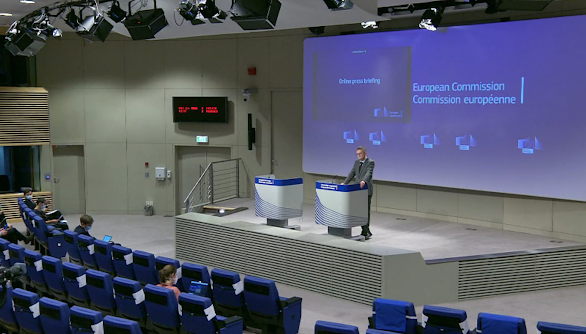
  • No more questions on these subjects. Journalists in the Commission Press Room are allowed to ask any question but apparently not on this subject, according to the Commission Spokesman. 
  • Just don't ask!

Why?

Censorship on bureaucratic and technocratic maladministration is the rule! That is what the Spokesperson of the European Commission declared in answer to my question.

What was my question? I asked when was the Commission going to publish the founding documents of modern Europe, Charter of the European Community. This defines how citizens can appeal against all sorts of bureaucratic abuse and malfeasance. It was signed at the time of Europe's first Community treaty in Paris on 18 April 1951.

Here is a link to my question: https://audiovisual.ec.europa.eu/en/video/I-217128

Commission Vice President Suica confirmed on 19 April 2021 that this and other historic documents on transparency and democratic control would be published for the Conference on  the Future of Europe.  That conference was initiated by French President Macron in response to the Democratic Deficit and Brexit. The conference is now drawing to a close without any discussion on the Charter.

Now apparently the bureaucrats themselves have decided that they should override both the Vice President and the public. They are refusing to publish the Charter. 

The founder of the European Community, Robert Schuman, probably had Britain's Great Charter, the Magna Carta, in mind when he called it the Charter of the Community. It is a system of justice and fair government. It defines the linkage to the human rights process.

The European Commission said that it is not going to answer the question, even if I asked it again. In fact the Spokesman refused to allow me the usual follow-up question, twice.

This is quite an extraordinary position to take. For half an hour, Mr Mamer had just answered multiple similar questions by different journalists on the bureaucratic consequences of Covid 19 on free movement of citizens. We have answered this question a thousand times, he said.  

But one answer about why the Charter is not published as promised? One answer about why bureaucrats buried it in the archives? One question as to what is going on? VERBOTEN!

And if any citizen had the naive idea that an appeal to the European Ombudsman about maladministration would have any effect on the Commission, they are mistaken. The Commission said they would ignore it!

Europe is in real danger.

After my question in the Commission Press Room, Eric Mamer, the Commission Spokesperson telephoned me. He repeated that they are not going to publish the Treaty Charter of the Community at the heart of Europe's democracy. Mr Mamer confirmed again that he would refuse to answer any further questions on the subject. 

I pointed out that the European Ombudsman had written to the Commission pointing out that the Commission had not given any reasons for not publishing the Charter. The Commission had therefore failed in its elementary duty to answer my complaint about this failure. 

Mr Mamer was adamant. He said he did not care what the Ombudsman said. Their position would not change whatever the European Ombudsman reported on the abuse. There were many other cases that they had done so. 

The letter I had received from the Commission's Secretariat General did not give any reasons for not publishing it. The official merely stated it was considered a declaration and therefore it was not going to be published, (whatever Vice President Suica said). Not logical. Surely the Commission can publish a Declaration if the Vice President said it was necessary.

The Charter is in fact an integral part of the Paris Treaty that defines the institutions of modern Europe. It defines not only the duties and installation of the Commission (High Authority), the Parliament and the Council of Ministers but also the European Court of Justice!  If you eliminate the Charter you should logically eliminate these institutions! 

This call confirms that the Commission is governed by rules of technocracy, not open democracy.

Europe is in grave DANGER.

For the Commission, apparently, it is not a question of whether the Charter is a legal and ratified part of the Paris Treaty or is a mere declaration or some other sort of document, the Spokesperson said that it is simply not going to republish it. 

I had prepared a letter to European Commission Spokesperson, Eric Mamer, following my question at today's Press conference. I then sent it to him immediately.

Here is my later letter to the EC Spokesperson in full.

Hello Eric,

In the Commission press room today, Eric, you said the Commission has answered my complaint about the non-publication of Europe’s foundational democratic documents. You did not allow my follow-up question. That did not let me clarify where you are mistaken on the Commission’s stated position for full publication. The letter (that I had not received at the time from the Secretariat General) said nothing to justify the non-publication of the Paris Treaty Charter. It merely gave an (erroneous) description of the Charter. I did not ask about the legal nature of the Charter.  That should be obvious. Schuman said that these documents provided a defence for citizens’ human rights against bureaucracy, technocracy, tyranny and totalitarianism.


The official at the Commission's Secretariat General refused to address the question of publication. The Ombudsman pointed this out to the Commission.  ‘It is not clear what relevance the nature of the document has with the decision not to publish…’ The Ombudsman added ‘The Commission has not replied to the complainant’s request that the documents should be published online and in the OJ.’


The failure to publish has nothing to do with how one official defines the document. The Commission said officially it would publish the foundational documents on European democracy.  

So did the Council. 

So did the European Parliament.


Reason enough that they should be published.  Is one official allowed to stop publication authorised by Vice President Suica and the Council Presidency? Can an official deny publication of a public document that is a constitutional foundation stone of Europe? Is a technocrat in charge to decide what is good and fit for the public to know above the Commission itself? This Charter is a document signed and sealed in Paris on 18 April1951 by the Six Foreign Ministers with plenipotentiary powers, ratified and legally deposited in the French Foreign Ministry.


The Vice President of the Commission affirmed that, for the Conference on the Future of Europe and the on-going debate on the Democratic Deficit, the Commission would publish this essential part of the Treaty of Paris. The Commission and the other institutions (EP and Council) represented in the press room on 19 April 2021 also confirmed they would publish the full text of the Schuman Declaration including what Schuman called the exordium, the initial summary that situated it in a geopolitical and historical context.


The Commission has not published either document. Fact. Why?


Is the Commission refusing to publish these documents?


I would appreciate your  reply on this question.


Regards,

David

Mr Mamer then replied to my letter as follows.

"We have spoken just now on the phone. You received a detailed letter from the Commission, dated 14 December 2021, that states the Commission’s position on the publication of the document you refer to and hence answers your questions.

As I already wrote to you on 21 December 2021, I have nothing to add to what this letter states, either in writing or in the press room. Kind regards, Eric."

 The European Commission has, inevitably, to answer to the people and to justice.


14 April, 2021

Open Letter to President von der Leyen on Europe's Democratic Future


Open Letter to President von der Leyen on Europe’s Democratic Future


Schuman Project

schuman.info

David H Price

Editor

9 April 2021


Dear President von der Leyen,

It is 70 years since the signature on 18 April 1951 of Europe’s founding document for peace, the Treaty of Paris. This created the European Community. It changed the destiny of Europeans who had gone to war every generation for more than two thousand years.


As the European Commission and the other institutions ponder the Future of post-‘Brexit’ Europe in the Conference to be opened on 9 May, I have one request to the leaders, the media and the public.


It is necessary to recall the founding principles of that peace and prosperity. This is not hidden. It is not something that can be changed by our generation. It was written in a document, signed by the plenipotentiary representatives of the Six founding States: France, Italy, Luxembourg, the Netherlands, Belgium and Germany.


What seems shocking to me is that the European Commission and the other institutions have not published this document. Schuman, a life-long student of democracy, called this the ‘Charter of the Community’ (Pour l’Europe, p146). It describes the Community method and the democratic principles that Europe must build on, in the same way as the United States applied the same eternal laws of human nature and worldly politics.


Schuman’s use of the term ‘Charter’ reflects that of the Magna Carta as a foundational document for British democracy. It distinguishes democratic Europe from the fraudulent ‘People’s Democracies’ of the Soviet eastern bloc. It is the litmus test of true democracy.


About a decade ago I spoke to the French Minister for Europe about publishing this ‘Charter’. He kindly supplied me with a copy from the French Archives. It was published on my website, schuman.info in 2012.


Although I pointed out this remarkable and important document to the Commission President at the time, the full text of the Schuman Declaration and the Charter of the Community has still not been published on the Commission’s own website. The lack of full information about the beginnings of European democracy is a disservice both to the general public, academics, the press and political leaders.


Secondly, while the European Commission has published the ‘full text’ of the Schuman Proposal, a governmental instrument, it has not published the text of his oral Declaration. The Commission website confuses the two: the governmental Proposal is aimed at other governments. The Schuman Declaration includes the explanation of the Minister of Foreign Affairs. The Declaration includes far-reaching clarification of the original proposal agreed by the French Cabinet and signalled simultaneously to other European States via French diplomats or Schuman’s meetings with ambassadors and parliament in Paris on 9 May 1950.


It would be fitting that the foundational documents should be fully published on official websites and recorded in the Official Journal.


Madame President, I am therefore requesting that these historic texts about the Future of Europe be published before the opening of the Conference on Europe on 9 May this year.


Thanking you in advance for your attention to this matter, I remain,


Yours sincerely,


David Heilbron Price


Annexes

1.

On 18 April 1951 the great Charter of Europe, as Schuman called it, was signed by all the representatives of the six founding Member State Governments. It was then placed in the archives of the French Foreign Ministry at the Quai d’Orsay.

It is the pledge of European Governments that all European Community future Treaties founding new Community organizations, all Acts and Laws arising from them would follow certain principles. This included such things as supranational values, like honesty, justice and truth. It pledged that all citizens would have to give full democratic agreement to any developments.

After being hidden in the archives of the Quai d’Orsay for sixty years, ignored and kept secret from the public by politicians, this Foundational Declaration was released by the French Government, following a request by the Schuman Project.


Charter of the Community

Declaration of Inter-dependence Charter of the Community

Déclaration de l’Europe Paris le 18 avril 1951

CHARTE DE LA COMMUNAUTE

(Pour l’Europe, p146)

Statue Foundatrice de l’ Europe

basant sa construction sur les Principes Supranationaux et le libre choix de ses citoyens


Déclaration commune des Ministres représentant les Gouvernements signataires du Traité

Le gouvernement de la République fédérale d’Allemagne, le gouvernement belge, le gouvernement français, le gouvernement italien, le gouvernement luxembourgeois et le gouvernement des Pays-Bas :

Considérant que la paix mondiale ne peut être sauvegardée que par des efforts créateurs à la mesure des dangers qui la menacent;

Convaincus que la contribution qu’une Europe organisée et vivante peut apporter à la civilisation est indispensable au maintien de relations pacifiques;

Conscients que l’Europe ne se construira que par des réalisations concrètes créant d’abord une solidarité de fait et par l’établissement de bases communes de développement économique;

Soucieux de concourir par l’expansion de leurs productions fondamentales au relèvement du niveau de vie et au progrès des oeuvres de paix;

Résolus à substituer aux rivalités séculaires une fusion de leurs intérêts essentiels, à fonder par l’instauration d’une communauté économique les premières assises d’une communauté plus large et plus profonde entre des peuples longtemps opposés par des divisions sanglantes, et à jeter les bases d’institutions capables d’orienter un destin désormais partagé,

Ont décidé de créer une Communauté européenne du charbon et de l’acier.

L’œuvre que nous venons de consacrer par notre signature est due à l’intelligence et à la ténacité de nos délégations et de nos experts; nous leur disons notre très grande gratitude.

Avant même d’être entrée en action, cette oeuvre a déjà, par la vertu de l’idée qui l’inspire, créé dans nos pays et au-delà de leurs frontières des espérances et une confiance tout-à-fait exceptionnelles.

En signant le traité qui institue la Communauté européenne du charbon et de l’acier, communauté de cent soixante millions d’habitants européens, les parties contractantes ont marqué leur résolution de créer la première institution supranationale et de fonder ainsi les assises réelles d’une Europe organisée.

Cette Europe est ouverte à tous les pays européens libres de leur choix. Nous espérons fermement que d’autres pays s’associeront à notre effort.

Pleinement conscients de la nécessité de donner tout son sens à ce premier pas par une action continue et du même ordre dans d’autres domaines, nous avons l’espoir et la volonté de mener à bien, dans l’esprit qui a présidé à l’élaboration de ce traité, les projets qui sont actuellement en préparation. Les travaux se poursuivront en liaison avec les organismes européens existants.

Ces initiatives, dont chacune est limitée dans son objet, devront rapidement s’inscrire dans le cadre d’une communauté politique, dont l’idée s’élabore au Conseil de l’Europe. II devra en résulter une coordination et une simplification de l’ensemble des institutions européennes.

Tous ces efforts sont guidés par la conviction croissante que les pays de l’Europe libre sont solidaires les uns des autres, participent à une destinée commune. Nous consoliderons ce sentiment en associant nos énergies et nos volontés, en harmonisant notre action par des consultations fréquentes et des contacts toujours plus confiants.

Telle est la signification de cette journée. Elle sera comprise, nous n’en doutions pas, par nos opinions publiques et par les Parlements qui seront appelés à se prononcer sur le traité. Les gouvernements ici représentés seront auprès d’eux les interprètes de notre volonté commune de construire et de servir ensemble une Europe pacifique et prospère. »


2.


Schuman Declaration – What Schuman declared


This is followed by the Schuman Proposal agreed by the French Government of Georges Bidault.

It starts “World peace cannot be safeguarded if constructive efforts are not made commensurate with the dangers that threaten it. …”

Full text at https://schuman.info/9May1950.htm


NOTE: What distinguishes Democracies — Free Choice (nations libres de leur choix)

The articulation of the ‘Free Choice’ of the Member States distinguishes them from fraudulent ‘People’s Democracies’ and dictatorships. Free societies decide their Community governance according to the most democratic procedures. A Community is created by the will of free people. It is not imposed like the constitutions of the Communist bloc by a party or parties. The Community, as manager of common resources and guardian against war between members, must be more democratic, fairer and more honest than its Member States. It should be a model of democracy for Europe and the world.

The Charter of the Community declares that all Member States

  • must safeguard the rights of their citizens before the Council of Europe according to the Convention of Human Rights and Fundamental Freedoms.
  • No national State that does not adhere to these Fundamental Rights may be admitted to ‘Europe’ whose very definition depends on this Convention of Freedom of Speech, Assembly etc
  • The voice of the nation must be respected. For example, Lisbon Treaty and its earlier redaction as the Constitutional Treaty were rejected in national referendums.
  • The free will of the people has not been given to the designation of the Commission President or the Commissioners who by law should be independent of political parties, lobbies and outside interests. The original fair system has been replaced by a closed-door horse-trading meeting of politicians.
  • Elections have not been held for the Consultative Committees (Economic and Social Committee and Committee of Regions) as assemblies of organised civil society,
  • Europe-wide election to the European Parliament (not 27 national elections) under a single statute as repeatedly included in all treaties since 1951 must be held,
  • The Court system should be fully independent of governments and outside interests.


How the Founding Fathers designed European democracy,

see https://schuman.info/supra5.htm

Why Brexit? and why do the other, oldest and strongest of Europe’s democracies like Switzerland, Iceland, Norway, not wish to join the ‘EU’? see

https://www.youtube.com/watch?v=3tcJKfuMYCk

Schuman speaks on Europe’s democratic principles for political union at the signing of the Treaty of Paris 18 April 1951.


Signatories of Europe’s founding treaty, 18 April 1951


07 November, 2012

SUPRA2: After 60 years France releases Europe's Foundational Charter of Supranational Democracy

The foundation stone  of European Law and Democracy has been revealed at last! Below is a copy of the key institutional document of European democracy that politicians have refused to publish for decades. It may not have been seen for SIXTY years. Now it needs to be fully integrated into European codes of Law and jurisprudence.

On 18 April 1951 the the Europe Declaration was signed by all the representatives of the six founding Member State Governments of the European Community. It creates the Foundation of a New Europe which made 'war not only unthinkable but materially impossible'. It provided a path as it says to create a new common destiny so Europeans could look forward to a peaceful future both of prosperity but also be forced to resolve peacefully common problems together and, despite the corruption and perversities of human nature, arrive together at moral and ethical solutions.

 In his book, Pour l'Europe (p146), Robert Schuman called it the great Charter of Europe's Community. After its signature and that of the Treaty of Paris founding the European Community for Coal and Steel, it was then placed for safekeeping in the archives of the French Foreign Ministry at the Quai d'Orsay, Paris.

It contains the pledge of European Governments that all European Community future Treaties founding new Community organizations, all Acts and Laws arising from them would follow certain principles. This includes such things as supranational values, like honesty, justice and truth. It pledged that all citizens would have to give full democratic agreement to any future developments.

General de Gaulle was no friend of the European Community and tried to destroy it. The Europe Declaration of Interdependence may have been buried in the archives at this time. It contains the word de Gaulle hated: SUPRANATIONAL, meaning that dictators would find no place in a democratic Community of democratic Member States. He wanted to replace the independent European Commission searching out the common good and just solutions with a secretariat subservient to his own political views (Fouchet Plan and the crisis of the Empty Chair).

Democratic politicians in other countries together with democrats in France fought off this plan for Gaullist hegemony of the Continent.   Yet politicians after de Gaulle never published this foundational document, nor developed the Community's democratic institutions to any great extent. Referendums were avoided or simply disdained.

The Community's democratic and supranational principles have been ignored in recent developments including the construction of the euro. This is based on economics of national currencies strung inadequately together by international agreement of politicians, not the people. The Community system envisages a European Currency controlled by a properly elected European Parliament under a single electoral statute and organized civil society in a fully elected Economic and Social Committee.

 After being hidden in the archives of the Quai d'Orsay for sixty years, ignored and kept secret from the public by politicians, this Foundational Declaration has now been released by the French Government, following a request by the Schuman Project. It is now published on its site www.schuman.info/CharterQdO.htm


31 May, 2011

Truth 14: The Right to Choose is at the foundation of Human Rights

Having received a reply from the European Commission again refusing to publish the Great Charter of the Founding Fathers of the European Community, I was invited by the European Ombudsman to give my reactions.

Background The Founding Fathers of Europe defined 18 April 1951 as the day which was the Birthday of Europe. Their signatures of the Treaty of Paris and the commitment of Six Founder States, they said, was the 'REAL FOUNDATION' of Europe. It was to be based on supranational democracy. They provided a Great Charter defining as the principal right of citizens the right and freedom to choose. This is necessary to distinguish TRUTH. This excluded the so-called 'People's Democracies' where the political parties were in control and free organized civil society was banned or gagged. It excluded religious autocracies. It excluded any form of political dictatorship. Recently European politicans European politicans refused to recognize referendums saying NO to their shoddy Constitutional Treaty designed to give parties more power. They changed its name to the Lisbon Treaty  and parties forced it through. They have spent more than 4 million euros (plus untold millions indirectly) in deceitful propaganda like the 'Together since 1957' programme. The aim was to try to convince European citizens that the European Community began in 1957 with the treaties of Rome. They mention only one treaty -- the Economic Treaty -- and say that all the EU today derived from the Market. This is FALSE. First came reconciliation then Europe's democratic political structures. Europe began with the European Community system in 1951, the first Community being the European Coal And Steel Community. It created Europe's first Single Market in 1953 and created the need for further democratic Communities. Since the time of de Gaulle in the 1960s these Communities have not been able to function democratically because of the centralizing position of the Council of Ministers and now the European Council.

Here is my reply.


Schuman Project
David H Price, Editor

30 May 2011
To
Director General, Communication
European Commission

Re: Ombudsman refs 1200/2010/RT and 663/2011/RT

Dear Mr Sørensen,
Thank you for your letter of 15 April 2011 relative to my long correspondence about the EU’s plans for celebrating the 60th anniversary of the founding of the European Union on 18 April 2011.

I am glad to receive confirmation that Mr Robert Schuman’s Declaration of 9 May 2011 will be published in its full form, that is, the Commission publications will be corrected. That implies correction according to a certified copy from the original held by the French Foreign Ministry. Does this ‘corrected’ Commission publication include the preliminary, strategic paragraphs placing the French government decision in its world political context? I would be grateful to know if you have received an official copy from the French Foreign Ministry. If so, I would be grateful to receive a copy.

I wish to renew my request for the immediate publication of the Charter of the Founding Fathers, the Declaration made on 18 April 1951. Notwithstanding the remarks of the Ombudsman in 1200/2010/RT, I believe it is the Commission’s legal responsibility to publish Europe's great Charter, establishing the ‘true foundation’ of Europe, based on supranational democratic principles. The argument about its absence in the archive of EUI at Florence is irrelevant. This is based on a misunderstanding of the dating {it starts officially in August 1952} and mission {it covers internal bureaucratic files only}of the Florence EUI Archives, as I described in my letter of 16 February 2011.

The reasons the Commission is legally and morally obliged to publish the Charter include the following:
  1. The Declaration of the Founding Fathers acting as Plenipotentiaries of the Six is an official document of the European Community. It is a concomitant part of the foundational Treaty of Paris that was ratified in all parliamentary chambers of the Founder States.
  2. The Commission believes it right to publish the foundational Treaty of Paris, even though it does not possess an authentic copy from France in Brussels or in its archives at Florence. France gave official copies only to Member States. The Treaty is the original basis for European law. All the Community institutions should publish this Charter as a concomitant part of the Treaty. The Charter is also part of Community law, defining rights and duties of States, organisations and individuals, as well as those of the European institutions. The principles of the Charter are not time-limited in any way.
  3. This legally important Charter contains elements and principles dealing with Fundamental Rights and Freedoms of all citizens. There is no excuse as to why it has not been published by the Commission. This is a major oversight. It denies citizens proper knowledge of how the European States and institutions have recognized their rights.
  4. Being published on an unofficial Luxembourg website (which is not always working properly) is not an argument to relieve the Commission of its dereliction. The Commission has legal responsibilities to publish it as a founding document. It is a legal responsibility of the Commission and the other institutions to make known to citizens their rights and privileges as being part of the Community. This Charter document is a succinct legal document describing those rights. One of the obligations spelt out prominently in the Charter is that it must be properly published, specifically by the governments and others organs. (See inter alia the first paragraphs and the last line of the Charter.)
  5. Other documents such as the Charter of Fundamental Rights in the Lisbon Treaty have been published. Yet this 1951 Great Charter is the foundation for those rights in the Lisbon Treaty Charter. It is all the more reason why the Commission should not only publish it but give it great prominence.
  6. It is a legal document of the Community signed by Plenipotentiaries, and ratified by Parliaments. It should also be introduced into the legal database of documents of the EU such as EurLex.
  7. It defines the conditions by which the two halves of Europe, divided by the Iron Curtain, or military occupation such as Cyprus can be fully active members of the European Community. It provides the philosophical basis for the Community’s foreign policy. This is of major importance in relation to the ‘Arab Spring’ and events in the Middle East, Africa, China, Russia and elsewhere.
You write that ‘The celebration of other important historical dates, such as the 60th anniversary of the Schuman Declaration or of the Treaty of Paris, were not selected by the European institutions as communication priorities.’ {My emphasis} Can you tell me how this was decided? Who authorized spending ɛ4.2 million on the ‘Together since 1957’ project and that this date should be acclaimed as Europe’s 50th birthday – when clearly it was not? Which committees were responsible for checking, controlling and passing a multi-million euro programme based on false historical information?

How much was spent on the Robert Schuman Declaration celebration in May 2010, how was it selected, who authorized how was it spent?

Who decided that the real 60th birthday of Europe, as defined by the Founding Fathers, 18 April 2011 should not be ‘selected’? Which officials decided that nothing should be spent on it and that not even a press release should be issued? Who was on the committee? Were the concepts in my long, two-year correspondence saying that it should be the major celebration of recent years discussed? Mr Schuman declared that his great initiative ‘would make war not only unthinkable but materially impossible’. That has happened. Europeans are now living in the longest period of peace in more than 2000 years of history. Why was this date, not only not selected but being a hugely important and well-known calendar date, DE-selected from any celebration, mention or the slightest communication? I enclose a recent article I wrote about it, published on several websites in Europe and North America. http://democracy.blogactiv.eu/2011/04/18/mr-barroso-where-is-europes-celebration-of-the-first-real-peace-and-democracy-in-2000-years-today-18-april-2011-is-the-60th-anniversary/

Thank you in advance for your replies to these questions. I am enclosing a copy of this letter to the Ombudsman as the above questions were raised and not answered or dealt with even after the above referenced complaint.

Yours sincerely,

David Price