Showing posts with label Common Law. Show all posts

31 October, 2019

EU Commission shuns UK as an Island of Lepers. Why?

For the whole of this century European Commission chiefs have been trying to stop Europeans asking the most vital, existential question!
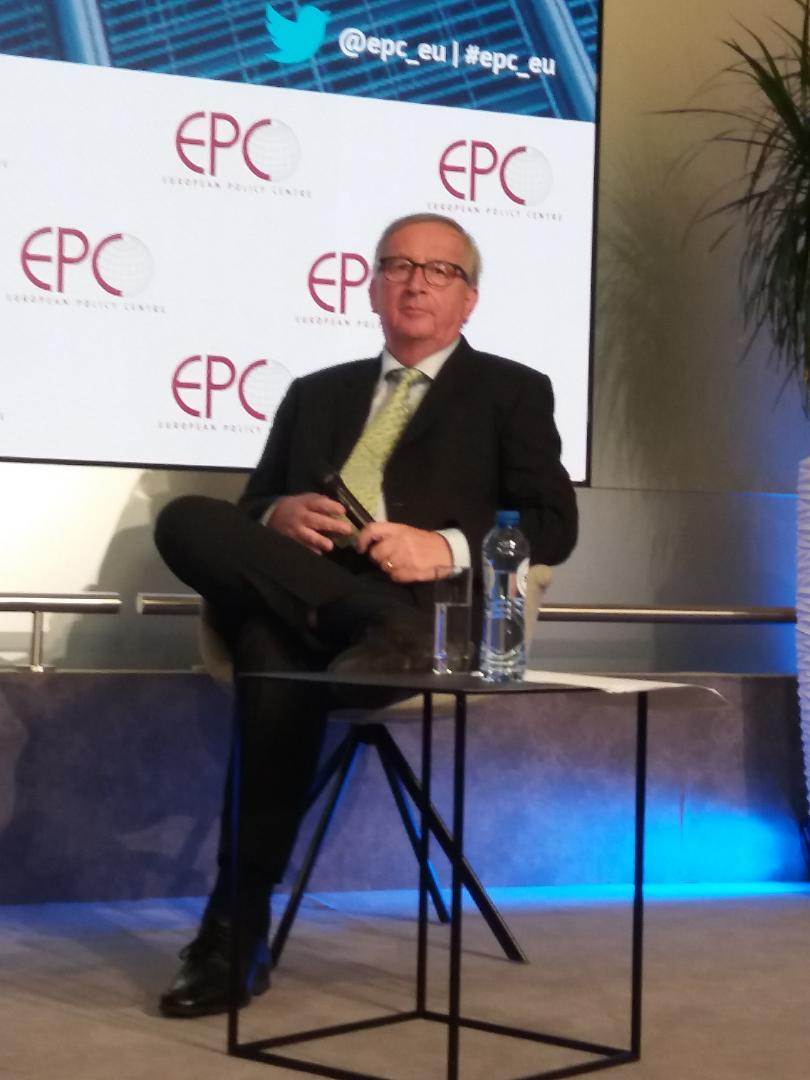
Brexit, says EU Commission President Juncker, is Europe’s biggest issue! But he won’t come to Britain.
The Commission tactic: No debates on EU’s fundamental faults with Britain!
In the last two decades amidst the greatest political crises of Europe, Commission Presidents have made perhaps three or four visits to Britain. Most were semi-secret and not open to the public.
Hence Commission presidents Juncker and predecessor Barroso have held no top-level debates with the British public this century!
How many trips to UK? The Commission refuses to give any figures at all. Even less will it compare it with Mr Juncker’s incessant visits to France, Germany, Italy, Greece and everywhere else around the globe.
Great Destroyer
President Juncker has toured and spoken in Germany’s provincial parliaments. From the Saarland regional parliament, he denounced one British prime minister, who questioned Mr Juncker’s legitimacy, as a ‘great destroyer of modern times‘. That’s tough company if it includes Hitler, Stalin, Mao, Osama bin Laden and al Baghdadi of the jihadi Islamic State.
Mr Junker has lectured Belgium’s Flemish and Walloon parliaments with his doom-laden message of Europe’s inevitable decline. He has spoken to the tiny German-speaking community of Belgium.
The British Mother of Parliaments he treats with disdain. Not a word uttered there or any other association, club or assembly. For the Scots he is silent. For the Welsh he is wanting. For the Northern Irish he is aloof.
Across Britain, pro-Europeans march in their myriads. From Hyde Park Corner (legendary bastion of free speech) to the Houses of Parliament, they raise their voices. They wave their European flags. Monsieur Juncker is missing and mute. Bizarre conduct for someone who announced that he was changing the Commission’s impartial status in the treaties to become the first “political Commission”.
‘The Commission is not responsible for Brexit,’ Mr Juncker said on 24 October. He was speaking at the Brussels-based think tank, the European Policy Centre in what he billed as his last speech.
He said that, if UK media tells its public for 46 years that the UK is in EU only for the market — and the rest is bullshit — the referendum result should be no surprise.
Is this true?

“Brexit is a shame and is the most difficult problem we have ever had to face. I do not think that Brexit is in the interest of the Britain, nor in the interest of the European Union. All of us – we will pay the price,” Mr Juncker said.
Why then do Commission presidents refuse to step on UK soil? Wouldn’t coming and offering more money help morale? Money and markets seem available by the bucketload for other Member States via the €440 Billion Juncker Plan.
Real Problem
Something more serious is the core problem, not economics. The Presidents of the European Commission have been avoiding any real dialogue with the United Kingdom. They treat the UK as an Island of Lepers!
They refuse to cross the Channel. Why? Is UK contaminated? No, but it has a contagion. It is called:
D E M O C R A C Y.
Do European Commission presidents fear Hyde Park Corner? Or is it the House of Commons and British Common Law? British Common Law has upheld the nation’s democratic heritage together together for 3000 years — long before Romans ever thought of coming.
This diagnosis should come as no surprise to Brussels. The British have been complaining about the Democratic Deficit since 1977.
The complaints came from pro-Europe activists, not the sceptics.
Prof David Marquand used the term Democratic Deficit in his 1979 book on the European Parliament. The Political clique, the new Politburo, refused to heed.
Thus began the long, long road that led to Brexit. See YouTube Brexit: Cause & Solution

Democracy is essentially about HONEST GOVERNANCE. That applies to all institutions and how they conduct themselves.
Honesty has been singularly lacking for decades. Without honesty and openness democracy’s fuel tank is filled with sand. The motor blocks. That is what has happened today.

Democracy Postponed
The Deficit is not just about lack of ‘one elector, one vote‘ of MEPs. That elementary requirement for parliament democracy has NEVER been implemented in 70 years! Don’t hold your breath. There should be one set of election rules for Europe, not 28.
Schuman and Europe’s Founding Fathers said that the Consultative Committees should have a role comparable to the Council of Ministers. They must elect their own representatives of organised civil society. They would act as a sort of Europe-wide Think Tank. Thus representatives would be able to give in-depth understanding of the needs and potential of Europe’s
  • workers,
  • industries,
  • consumers and
  • regions.
Never happened. Elitist politicians decide on who can be members of these ‘democratic‘ bodies! On a temporary basis, of course.
The Founding Fathers said that Ministers should hold open Council meetings. What was said would be reported on TV and in the press. Today’s politicians refuse.
They now drive Europe further into secret government.
They created a super-secret European Council! The EU and its misbegotten currency the euro is run by the EuroGroup, an “institution” that appears nowhere in the treaties!
Deficit Origins
The Community system, announced by Robert Schuman on 9 May 1950, provided the most democratic proposal ever.
It worked.
He was inspired by his study of the British and American constitutions, themselves based, as he wrote, on biblical principles of justice. Instead of incessant wars that had plagued Europe for more than 2000 years, Europe had for the first time lasting peace and prosperity.
Many Britons wanted to join. Others suspected the Continentals were untrustworthy.
Europe’s Customs Union and Single Market flourished. Hit by labour unrest, UK had declined into a parlous economic state. UK was known as the ‘Sick Man of Europe‘. Britons learned the lesson that a democratic Customs Union was the way to prosper.
But British governments had left it two decades late to join. Since 1945 de Gaulle fomented a revolution to overturn the French Constitution. He seized power in France in 1958. France remained under the autocratic control of the Gaullists. They were intent on wrecking and destroying the Community’s democratic base while making sure France by political pressure had the lion’s share of the Community budget.
The UK arrived when the Community system was palpably in a major crisis of trust. The thirty glorious years of the postwar economic miracle were faltering because autocracy always damages the economy as well.
The Democratic Deficit can more properly be traced from 1973, the year UK joined the European Communities. To outsiders the damage was obvious. The British Labour Party was so disgusted at the way the Europe’s Parliament was treated under de Gaulle, and was still being treated, that they BOYCOTTED it!
How did it happen? How did a whole parliament, proposed by Schuman’s government in 1948, become a shipwreck?
The French autocrat, Charles de Gaulle, president from 1958-69, forced an agreement on the then politically weaker Germany, led by Konrad Adenauer. All the instruments of democracy were suspended. De Gaulle forbade European elections to the Parliamentary Assembly. All democratic institutions were frozen or “chloroformed” according to his scheme.
De Gaulle’s minions decided European policies behind the closed doors of the Council of Ministers. Power politics reigned. The Council and even the Commission consigned parliamentary Amendments on legislation to the dustbin without being read. The Consultative Committees were never elected. Gaullist graft ensured French farmers benefitted from his corrupt and bloated Common Agricultural Policy that cost two-thirds of the Community budget.
So, post-de Gaulle, did European politicians reverse the democratic deficit and stop having secret meetings? Did they have proper elections? Did they have budget accountability?
Not at all. Worse was to come. They grafted Gaullist graft into their system. They turned it into a secretive party political oligarchy.
The Acid Litmus Test
Today Europe is faced with a Europe divided between the neo-Gaullists who have absorbed anti-British attitudes and those who understand that open, democratic, Community principles brought Europe’s peace, prosperity and the freed the nations behind the Iron Curtain. Others are just confused about European governance.
Unhappily the confused seem to be in the majority when Europe’s future was discussed in 2001. Elitist authors of a new treaty failed to convince the public. It rejected Constitutional Treaty and its later identical twin, the Lisbon Treaty. Instead of insisting on Human Rights politicians tried to subvert them. The public smelt the fish.
Elitist projects are built on constitutional errors, lack of honesty and humility. Robert Schuman warned such schemes would lead to unrealisable utopias.
Human Rights Violations
Contrast that with Europe’s birth. The early Community treaties had to be examined by the Council of Europe, guardian of the Convention of Human Rights and Fundamental Freedoms. Elitist politicians knew they could not succeed under this scrutiny.
How can we Litmus test the anti-democratic acidity of the present politicians?
They abandoned any Human Rights checks on treaties.
They refused to recognise the public’s right to a referendum. If the public got the ‘wrong’ answer, the Commission told the Council the States must vote again.
  • Maastricht 1992 Denmark.
  • Nice 2001 Ireland.
  • Euro 2000 Denmark.
  • 2003 Sweden.
  • Constitutional Treaty 2005 France & The Netherlands
  • Lisbon treaty 2008 Ireland.
  • Greek Bailout 2015.
  • Ukraine Association 2016 NL
The UK was refused any referendum on any treaty since 1975. UK has not confirmed by Referendum the Lisbon Treaty (and its Article 50). The Brexit Referendum of 2016 based on Article 50 is illegal UNLESS Britons first agree by Referendum to this treaty!
The people are not subject to the Lisbon Treaty because it was imposed by Parliament contrary to Government promises that a Referendum would be held on the Treaty itself before Article 50 could be used. The Lisbon Treaty (then called the Constitutional Treaty) was rejected by France and the Netherlands and others. Parliament is subject to the voice of the people in legitimate referendums.
Now track the Commission. See what they are up to. See if and how they engage in democratic reform and debate with the public. For example, Britain.
The presidents of the Commission zip around Europe. They fly around the world. They collect fancy medals and honours. They collect scores of honorary doctorates.
But not in Britain. Why?
President Jean-Claude Juncker is nearing the end of his five-year mandate. What’s the record? At times he has seemed to spend part of every week in Berlin, if not in Paris. Then he’s off to the Mediterranean and Italy, Spain and Portugal or the Black Sea reaches of Bulgaria and Romania.
To England? Naaaaah! A fast Eurostar train from central Brussels to central London is just too far.
How many times has he visited London or any other part of the UK?
He made one trip for an evening dinner in London. Did he speak to a mass meeting of concerned British democrats. Did he speak to Parliament? No. On 27 April 2017 he had a private meeting with PM Theresa May to describe the length and breadth of any agreement on Brexit. With his team of Martin Selmayr and Michel Barnier, he visited 10 Downing Street under tight security to tell Prime Minister May that Brexit was no walk in the park. He came loaded with the Canada agreement to show how big a document a trade agreement normally was and how negotiations are conducted.
Mr Juncker told a Polish journalist that he has actually visited London on another occasion. When? No one can remember. That makes two trips in 5 years.
Why did he not come more frequently given the gravity of the Brexit crisis — which at the time threatened the disintegration of the EU. When asked by a Polish journalist how many times he has travelled to Mrs May at Downing Street, his less-than-chivalrous reply was:
“Why fly somewhere, if you can discuss it here?” He added: “She used to sit at the place where you are now, at seven in the morning, at eleven o’clock at night.”

Then there is a division of views on politics across the Channel. Many Continental politicians, regardless of what laws and treaties say, feel they can do what they like. No one will take them to Court.
Some of UK’s nearby neighbours don’t blink an eye at presidential slush funds. A mistress of 30 years is housed at the State’s expense or another lover is made prime minister. Would taxpayers in UK agree?
Ministers and prime ministers across the Continent get away with financial and political corruption.
In UK ministers are forced to resign if they mislead the police on a motoring offence. They may end up in prison.
The Question
What is the question that European Commission Presidents don’t want to hear? There are many words which point to the same direction: accountability to tax-payers, honesty to electors, open government … or simply real democracy.
What is the major chasm of credibility for Europe? Fraud. Political fraud.
What Commission presidents Juncker and Barroso fear is that the whole fraudulent Lisbon Treaty structure will come crashing down on their heads. It should.
Why is the Lisbon Treaty fraud big-time? It is not just that this changes the constitution of 28 Member States without the approval of the citizens.
It is not just that it puts European government in the hands of politicians who prefer secrecy and political plots above transparency.
It is that the whole treaty was rejected by Europeans in massive referendums. Further referendums on the renamed treaty were refused by the political clique. Elitists think they know better than everyone else.
The articles are the same as those misshapen monstrosities that appeared in the rejected Constitutional treaty, committee-written under the supervision of former French president Valéry Giscard d’Estaing. This camel of a treaty was roundly rejected by the French and the Dutch in 2005. Six other nations, including UK, were expecting to have referendums. But the political clique refused to let them. The outcome was clear to all. No. No. NO!
Mr Barroso said the camel looked partly like a horse. Spaniards (who were pretty fresh to democracy) voted for it. That’s no endorsement.
But politicians and bureaucrats thought they could get away with it. Two years later the rejected articles were forcefully re-instated as the Lisbon Treaty. How? Articles were retained and inserted as amendments to an old treaty, the much-amended European Economic Community treaty of Rome, 1957.
Why were no further referendums allowed? Bureaucrats said so.
Giscard himself explained in an article published in a number of newspapers. The British must be denied a democratic voice. Human rights must be suppressed.


This deception operation, was foisted on the public by the Council. It is an affront to any citizen with a micron of morality. It was whipped through parliaments because their ministers told their parties to avoid referendums at all cost.
In a democracy who tells parliaments to obey?
Not even the ministers. In the Brussels Bog it was the bullyboy bureaucrats at the Council who insisted that the Lisbon Treaty would not die by democratic decision. It must be re-instituted regardless of the cost to honesty and integrity.
Did Mr Barroso come and explain his strange decision to the great British public? He came to UK perhaps once to Chatham House for a one hour meeting at the end of his ten-year mandate (24 October 2014). Then, amid public outrage, he was off to join Goldman Sachs.
The Lisbon Treaty is illegitimate. So is its equally fraudulent Article 50. This is why the UK Referendum of 2016 is causing a political impasse.
The official name of the Lisbon Treaty is Treaty on European Union (TEU) plus the Treaty on the Functioning of the European Union (TFEU). The EU Treaty, for short. But leaving the EU is not the same as leaving the European Communities. Hence, logically, a referendum that affirms the desire to ‘Leave the European Union‘ does not mean leaving the Customs Union and Single Market of the European Communities.
Rather the Brexit vote affirms that British electors want an end to the Lisbon Treaty fraud.
Before any progress in Europe can be made, legitimacy needs to be restored. Europeans require that THEIR VOICE is sovereign — not bureaucrats. Legitimate Referendums must be respected. Politicians should no longer hide themselves behind closed doors. The public must have an open dialogue about their plans and investigate their plots.
No more political Leper Colonies!


01 August, 2017

Brexit, Common Law and Ancient British Laws on Referendums

For the average person the idea that, after the people had voted in the 23 June 2016 EU Referendum to be free from “Brussels Bureaucracy,” they or the UK Parliament would have no further say on details seems patently absurd. What use is freedom from Brussels if Parliament is silenced about how to proceed? Where is the justice in that?
The government of PM Theresa May saw it differently. The government could apply autocratic Royal Prerogative powers. Britons would exit immediately because the EU was just another treaty. No reference to Parliament was needed, they said. However, Democracy is central to Britons. The three European Communities and the European Union of the Lisbon Treaties have affected domestic law and improved many aspects of everyday life. Citizens’ rights are not for decapitation by a blind, angry axman. Debate sharpens Democracy and Justice.
Only 37% of electors voted to LEAVE the EU. The rest did not vote or wanted to REMAIN. The ballot paper mentioned nothing about the European Communities, such as Euratom. The House of Common Library Briefing Paper, included in a recent book, Brexit, Miller and Henry VIII, noted that the Referendum was advisory and not legally binding.
If that is the case, what advice was the public giving the Government? Was it “Reform Brussels!”? Were people fed up with the neo-Gaullist style of Brussels autocracy or trade? Decision-making – again on nearly every aspect of everyday life – occurs behind closed doors. Secret Democracy is an oxymoron. Citizens’ freedom to think and act comes first.
Secretive Governance was certainly not part of the original concept of European democracy defined by the Charter of the Community and the supranational Community, that of Coal and Steel. Both documents were signed by six founder States on 18 April 1951, after the Schuman Declaration of 9 May 1950 and the Convention of Human Rights had laid out the broad plan. The New Europe was defined by guarantees of Freedom.
Schuman wrote in his book, Pour L’Europe that in this Democracy all the Councils and Committees would be open and under the supervision of public opinion. Why public opinion? Because only a public debate based on facts can contribute meaningfully to a real democracy. Secondly the public statements of the leaders in debate are important for the public to judge the disinterestedness of the leaders. Thirdly, the Statements in the Councils and Committees provide means for the public to hold them to account. Fourthly, politicians who distribute public tax money in private with no accountability, only encourage corruption. The Gaullist CAP spent up to 71% of Europe’s Budget on agriculture. Millions went on vanity projects.

European Democracy.
How should European democracy be constructed? How should an ancient State like the United Kingdom affirm what it considers true principles for extending democracy from its island home to participate fairly with the Continent? How should Continental States also affirm the same principles so that everyone is satisfied with open, honest management?
Today three UK institutions are involved: a national referendum, a Court and a Parliament. The recent national Referendum on EU membership was largely without precedence except for the 1975 referendum to join the three European Communities. Central government stopped referendums. They have been ended for more than a millennium in those parts of the country where they were custom. Anglo-Saxons did not have referendums.
The referendum has come into its own because of a number of factors. Political parties are divided on such matters as the EU. Some are also losing public trust among the electors. Hence referendums seem to be a fair way to make a decision. The EU one exposes deficiencies in both UK and the EU.
Referendums can be binding or advisory. The EU referendum, according to judgements Divisional Court judgement #106 and Supreme Court #119, was non-binding. It carries no legal obligation. An Act is needed. To prevent political dissension, the May Government imposed strong party discipline. Labour too. Did PM May turn the plea for open-minded democracy in Brussels into Westminster despotism? How can citizens arrive at a just solution? Is it possible?

Common Law
The situation was quite different in pre-Roman Britain. The country was divided into a number of tribal areas but they were interconnected by marriage and exchanges. That required an elaborate and effective system of law to be active to ensure justice nationally. Strabo, the early first century Greek geographer, wrote that its teachers taught the science of nature and also moral philosophy. ‘They are believed to be the most just of men, and therefore entrusted with cases affecting both individuals and the public.’ Celtic society was based on freemen who could prove they and their family had not been slaves for nine or ten generations. Those without such proven reputation, working as serfs or foreigners who were resident, did not have the same privileges of political and legal power.
Although they had kings or princes based on royal families, society refused to let kings be autocratic and above the law. They held as custom that:
The country is above the prince. Trech gwlad nag Arglwydd.
That is the prince could in no way bind the country and that the prince himself was under law. Justice ruled. How?
The ancient Triads dating back many centuries before Britain was invaded by Rome were highly developed, ethical and sustained by extensive education and reasoning in the principles of law. Julius Caesar affirms that the youth spent twenty years in the various colleges. This contrasts with the rote learning of the Romans and its military dictatorships.
Hundreds of Triads define the principles of justice. They confirm that courts existed with Jurors or Assessors who acted with the Judges. This is the system that the Britons passed on to Saxon King Alfred the Great, 849-99, (who had John Asser, the British bishop of St David’s in his learned court). It is still found in the system of Court and Jury that we have today.

A Jury of peers is the key to freedom under law. Alfred also incorporated the Ten Commandments, other quotations from the Hebrew Scriptures as well as the Apostolic Letter of James, the brother of Jesus in the Greek New Testament, Acts 15. The pursuit of Wisdom was integrated into the code of 120 articles, to make it acceptable to those Welsh/ British areas who had agreed to Alfred’s overlordship.


Alfred had diplomatic relations with leaders around Europe and also with Elias III, the Patriarch of Jerusalem.
Centuries earlier, the Ancient British had three institutions that allowed them to target just and lasting solutions to legal problems: a tribal or national referendum, a parliament or Assembly of respected representatives (probably tribal elders), and a Court of Justice that would analyze the legality of decisions with principles and precedent. They were the keys to prevent tyranny.
The Laws of Dyvnwal Moelmud around 400 BCE are a compilation of earlier precepts. Among them we find:
Triad 175. Three kinds of votes are valid as law: the collective vote of the Sovereign Country …enacts, abrogates or improves Law; the second is the vote of the country in the three hundred men; the third is the vote of the Court given by jurors (assessors) or elders of the nation under protection and the privilege of the Court.

Triad 98 Three tyrannical perversions of Law: fully deciding upon a case before minutely enquiring into the truth; deciding contrary to the nature and the inevitable consequences of events and times; and forcing a man to his injury where there is neither Law nor Justice requiring the decision by which he is compelled.

A Briton could call on either a tribal meeting or even a national referendum if he was refused the basic elements for dealing with his case in justice.
There are three things that must be listened to by the Court and the Judge:
  • A complaint,
  • A petition, and
  • A reply.
The person who is denied this right has the privilege of appealing to the vote of the country, as called together by the chief of the tribe.

Once the Saxons had overrun the eastern lowlands of Loegria (England) many of these legal principles were lost. Bede describes how the Saxons first started to write out independent laws or penalties (called dooms) only in the fifth century. The Anglo-Saxons had an elective monarchy favouring decrees based on the monarch’s personal power, rather than law. However the native Celtic population (both in Anglo-Saxon and Danelaw regions) would have tried to maintain some of these ancient principles by argument and debate (which the Saxons were accustomed to) rather than by law courts with juries that they did not have. This may have been the origin of what we now call English Common Law or custom.

Magna Carta
Common Law thus predates Anglo-Saxon, Norman and also Roman law. British constitutional Common Law, Rhaith Gwlad, makes no distinction between king and freeman. Common Law became part of the traditional unwritten law of England, based on custom, then its key feature.
However even at the time of Magna Carta in 1215, the British laws were still active. Indeed Magna Carta includes articles that ‘Welsh laws’ should be restored where they had been abused by the autocratic King John.
“Article 56. If we have deprived or dispossessed any Welshmen of land, liberties, or anything else in England and Wales, without lawful judgement of their equals, these are at once to be returned to them. … Article 58 In cases where a Welshman was deprived or dispossessed of anything, without the lawful judgement of his equals, by our father King Henry or our brother King Richard, and it remains in our hands or is held by others under our warranty, we shall have respite for the period commonly allowed to Crusaders, unless a lawsuit had been begun, or an enquiry had been made at our order, before we took the Cross as a Crusader. But on our return from the Crusade, or if we abandon it, we will at once do full justice accord to the laws of Wales and the said regions. Article 58 We will return the son of Llywellyn {the Great, King of Wales}, all Welsh hostages, and the charters delivered to us as security for the peace.”

Thus the English or Saxon ‘Common Law’ has ancient British roots. A Saxon compendium of Common Law was introduced by King Alfred. He translated a later revision of the Dyvnwal laws written by Queen Marcia, Regent after the death of British king Guithilin, son of Garguic Barbtruc, son of Belinus, son of Dyvnwal. Her young son Sisillius (Welsh: Saessyllt), came to the throne in ca 358 BCE on Queen Marcia’s death.
Together with a book on the ‘Law of the monarchy,’ Queen Marcia’s work was translated into Anglo-Saxon / English language by King Alfred (849-899 A.D.) They became part of the Mercian laws.
When William the Conqueror arrived in 1066, he combined the some of this Anglo-Saxon law with centralizing Norman law. This contributed to English Common Law, much of which was by custom and precedent rather than by written code. By the 14th Century legal decisions and commentaries on the common law began providing precedents for the courts and lawyers to follow. It did not include the so-called law of equity (chancery) which came from the royal power to order or prohibit specific acts. The common law became the basic law of most US states due to the Commentaries on the Laws of England, completed by Sir William Blackstone in 1769.
The recent Supreme Court case related to the formulation of Henry VIII Clauses. Parliament’s website defines them thus:
“The Government sometimes adds this provision to a Bill to enable the Government to repeal or amend it after it has become an Act of Parliament. The provision enables primary legislation to be amended or repealed by subordinate legislation with or without further parliamentary scrutiny. Such provisions are known as Henry VIII clauses, so named from the Statute of Proclamations 1539 which gave King Henry VIII power to legislate by proclamation.”
No such clause appears in the European Communities Act of 1972.
In ancient British law, a super-king or Pendragon, could assume military powers by federal agreement of tribes. Otherwise, an individual and any group could demand justice, bringing the matter before a referendum of the tribe or nation. Justice was a universal virtue and federalizing force.
The recent dispute of Miller et al vs HMG highlights a long difference between Saxon autocracy and individual justice based on an educated populace. The Henry VIII Royal Prerogative case reasserts the right of an individual to challenge injustice. This was something that Parliament – where the Government has a disciplined majority of party loyalists – was not able to do. It exposes the inadequate power of Parliament, managed by party machines, to defend itself, as well as some other vital issues that have been buried for centuries.
The interventions and written cases here indicate the irreversible nature of the devolution process and power of universal justice. It is also inevitable that the eternal principles of British law will be re-established in their glory.
Within the European supranational system any individual, association or institution may take a similar issue to the European Courts. And in the near future many will. That indicates that Justice will take force from it too.

David Heilbron Price
Brussels, 30 January 2017
Bibliography:
The Cambro-Briton, vols 1 & 2 1820-1,
Transactions of the Cymmrodorion, vols 1 & 2 1822
Rachel Bromwich: Triodd Ynys Prydain, Triads of the Island of Britain 2006
Peter Bereford Ellis: The Celtic Empire 1990, A History of the Celts 2003
David Heilbron Price: Brexit and Britain’s Vision for Europe, 2016.
William Probert: The Ancient Laws of Cambria Triads of Dyvnwal Moelmud 1893
Peter Roberts: Dissertation on Laws of Dyfnwal Moelmud in The Chronicle of the Kings of Britain from the Welsh… 1841

04 June, 2015

Carta1: A travesty of Magna Carta -- Europe's Lisbon Treaty!

This month British, American and many Commonwealth countries celebrate the Magna Carta of 15 June 1215. The document signed at Runnymede by King John at the insistence of English and Welsh barons reaffirmed ancient British rights, some of them dating back more than a thousand years before King John. That is well before the fifth century Anglo-Saxons arrived (or the Normans in 1066). The codification of so-called ‘Welsh Law‘ by tenth-century ‘King of the Britons’ Hywel the Good before the English conquest stands as witness to some of these Common Law rights.


ChirkCodexWelshLaws
Chirk Codex in Welsh
The Magna Carta forced the English king to recognize that Justice was not at the whim of the ruler but a supranational value. Both Anglo-Saxons and Normans were a little slow in learning. Since time immemorial ancient Keltic and Cymric laws always maintained the principle, enunciated at the start of their assemblies ‘the country is above the king‘ ‘Trech gwlad n’ arglwydd’
Robert Schuman, the Founder of the European Community system, was a passionate theoretician and practitioner of democracy. He was an admirer of the British and American democracies. His definition of democracy improves on Lincoln’s famous adage of democracy being ‘of the people, by the people and for the people.’
Schuman said that ‘What characterized a democratic state were the objectives that it proposed for itself and the means it searches to attain them.’  Thus while European unity was a good goal in the modern world what was also important was the means by which it is attained and the instruments by which that unity is governed by the people. He continued:
‘It is at the service of the people and acts in agreement with it.’
Service to the people is a vital criterion. It is, in other words, the search for the common good. Just by writing those words evokes the need for a broad debate about what is ‘service’ to the people. What is really the common good? It requires the public exploration of ‘European values’ based on spiritual and moral foundations.
That is why Schuman drafted a Great Charter of the European Community. Also known as the Europe Declaration, it was signed by all the Founding Fathers when they agreed to the Community principles on 18 April 1951. They also signed the first treaty, that of a European Coal and Steel Community, whose basic idea was to expose in practical terms how peace could be constructed and how democracy could be erected at the European level.
image002
image002

The Great Charter of Europe gives as a major principle the following:
In signing the treaty founding the European Community for Coal and Steel Community, a community of 160 million Europeans, the contracting parties give proof of their determination to call into life the first supranational institution, and consequently create the true foundation for an organized Europe.
This Europe is open to all European countries that are able to choose freely for themselves. We sincerely hope that other countries will join us in our common endeavour.
That assurance and guarantee was vital as the Community system stood starkly and courageously in contrast with so-called ‘People’s Democracies’ of the Soviet zone of control. No west European country could boast the  98 percent turnout of voters in the German Democratic Republic (DDR) from 1950 to 1970s. What is even more ‘enviable’ was the extent that 99 percent voted for politicians of nominal Christian Democrat, Liberal, Socialist and other parties who supported the common Communist programme. Only a fraction of one percent voted against this Soviet-controlled programme!
Were elections really free? Obviously not. But at least the DDR let the people vote, even in referendums! The common programme was devised in secret without free public criticism or open to the free press.
Where are we today?
This month of June 2015 is also the tenth anniversary of the burial of the sad affair of the Constitutional Treaty! (Sometimes it is erroneously called the ‘Constitution’. It was never a real constitution, as its author, Valéry Giscard d’Estaing, constantly said.)
France voted against it. With a 69 percent turnout, 55 percent said ‘NON’! The Netherlands were more emphatic — 69 percent No! Other Europeans in other States were set to vote against it. But their right to hold a referendum was withdrawn! By whom? The representatives of the people!
Schuman always respected the referendum votes (for example on the Constitution of the Fourth Republic). Even de Gaulle did too, although he used the referendum as a means to maintain autocratic power against the influence of political parties. When the people said No to his reform proposal, he resigned. How many politicians resigned in 2005?
Unfortunately the present breed of politicians is even more cynical and underhand. The politicians served their Constitutional Treaty up again. Not as a full text, but as amendments to the current treaty for the European Economic Community. Their document was a list. It was an incomprehensible mass of ‘omit this’ and ‘replace it with that’. The politicians said publicly that it was exactly their plan. It had to be incomprehensible to pass it through parliaments! They refused to publish the complete, amended treaty. One Belgian minister said:
‘The aim of the Constitutional Treaty was to be more readable. … The aim of this treaty is to be unreadable. … The aim of the Constitution aimed to be clear, whereas this treaty had to be unclear. It is a success.’ (Flanders info, 23 June 2007)
Was he sacked? No, he became a European Commissioner!
Instead of a referendum ( which was sure to be lost!) the political class agreed it amongst themselves. It gave parties money and power. They voted it in in their parliaments under party discipline. In some parliaments this was voted without seeing the text! In others, like France, it required a change to the national constitution to enable this unethical manoeuvre to be done. The European Parliament to its lasting shame refused to publish the full text before symbolically voting Yes on it.
No further referendum!
It produced the same result as the ‘Constitutional Treaty’ but was renamed the Lisbon Treaty. Was it identical? Yes except for the removal of articles on the official flying of the European flag and playing the European anthem. What a coldly Machiavellian piece of democratic mockery that action was.


Drapeaux européens devant le Berlaymont
Do European flags fly today at the Commission’s Berlaymont?
The basic principle that Schuman enunciated (signed by all Founding Fathers as the Charter of the Community) was that all steps towards European unity must have the wholehearted support of the people by democratic vote at all levels of European activity.
The Founding Fathers provided several independent institutions to guarantee that the Community would be easily distinguish as ‘Democratic Europe’ from the false and artificial ‘People’s Democracies’ of the Soviet zone.
These include:
  • a Council of Ministers that was open to the press in all its deliberations and decisions (not yet happened!).
  • A European Parliament that was elected under a single set of electoral rules (not yet happened!).
  • Consultative Committees that were elected by European Associations (not yet happened!),
  • Commission whose members  are honest as Court judges and have thus divested themselves of any relevant interests including membership of political parties (not yet happened and party membership is to be mandatory!).
Aren’t you glad that Europe today is not cynically controlled by Communists!